
When were humanity’s greatest achievements achieved?
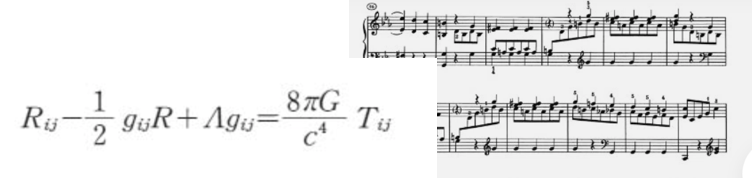
Everyone knows the names of great musicians like Beethoven and Mozart, and scientists like Einstein and Newton, and it’s clear that they have contributed greatly to human knowledge and the arts to date. Everyone is curious about when these outstanding talents blossomed and what backgrounds each individual had. In fact, detailed research has been conducted, and research papers have been published repeatedly. A recent paper in the scientific journal Science was titled “Recent discoveries on the acquisition of the highest levels of human performance” (Arne Guellich et al. (2025) Science, December 18th). Another paper, “Age dynamics in scientific creativity” (by B.F.Jones and B.A. Weinberg, (2011) Proc. Natl. Acad. Sci. 108, A paper entitled “The Age of Scientific Discovery: The Age of Scientific Discovery, 18910-18914” has also been published.
We would like to take a look at the background to the great discoveries made by great scientists and the wonderful works produced by artists that have been revealed through this research, particularly the characteristics of age and experience. This may be particularly useful for young people who are just about to embark on their life’s activities.
According to a paper by Jones et al., it has been pointed out that outstanding results in fields such as science and literature peak in the late 30s. Several studies have shown that this is around 37 years old in physics, 39 years old in medicine, and 40 years old in chemistry. However, there are also cases where breakthroughs are made in the 20s, and where great works are produced in the 50s. A paper by Guellich et al. suggests that people who show the greatest ability when they are young tend to continue to produce outstanding results at an older age. It is not often that people achieve great results at one of these two peaks, and it is often the case that people achieve great results at an older age. The results also show that when people achieve great results at an older age, they are not doing the same thing from a young age, but rather have studied a variety of different fields and delved deeper into their specialized field as time passed. This is interesting.
It is generally true that all great talents received initial instruction from someone, and that their talent blossomed sooner or later after that. Therefore, the importance of early education remains unchanged in any field. In today’s world, where cultures such as art and science have developed so wonderfully, it is now more difficult than ever to gain advanced knowledge or encounter high-level works at the start of one’s career than it was in the past. It is considered to be as important as ever.
Here, we would like to focus on the blossoming of talent and modern education. In today’s highly advanced civilization, graduate school is the only place where one can start learning expertise. What one learns at an undergraduate university does not go beyond the scope of liberal arts (general knowledge). To cultivate more specialized knowledge, logic, and presentation skills, graduate school is essential. The same is true in the fields of music and painting. In the field of economics, 20-30% of Western business managers study at a master’s level (MBA). Furthermore, since master’s courses in the West are considered to be the equivalent of dropping out of a doctoral program, many students go on to doctoral programs. In graduate school, whether in the humanities or sciences, students learn the ability to raise specific problems, propose solutions and ideas, and publish them in the form of a paper. Naturally, criticism of the results of their proposals is also an issue. We must also respond to these needs. The importance of receiving such a systematic education is not recognized in Japan, and as a result, not many students go on to graduate school. Data shows that less than 10% of Japanese executives have completed master’s programs. Until now, many Japanese executives have placed particular importance on experiential knowledge gained on the job, and the need for scientific and theoretical learning has not been recognized as it is in the West. To produce significant results that will change the world, we hope to see an increase in the number of people going on to graduate school. Since the early 2000s, the Ministry of Education, Culture, Sports, Science and Technology (MEXT) has sought to reform the current situation by creating professional graduate schools, which, unlike traditional graduate schools that aim to train researchers, emphasize practical work and hire many faculty members with practical experience.